Food Literacy, Food Access and Structural Inequality
A Strategic Advice for Duurzaam Utrecht 2030 Cookbook Initiative
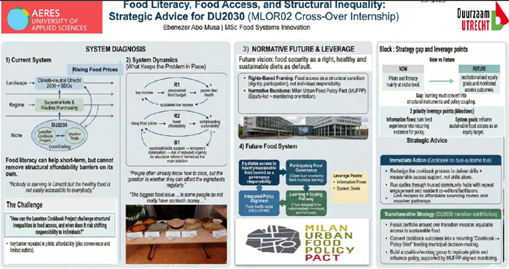
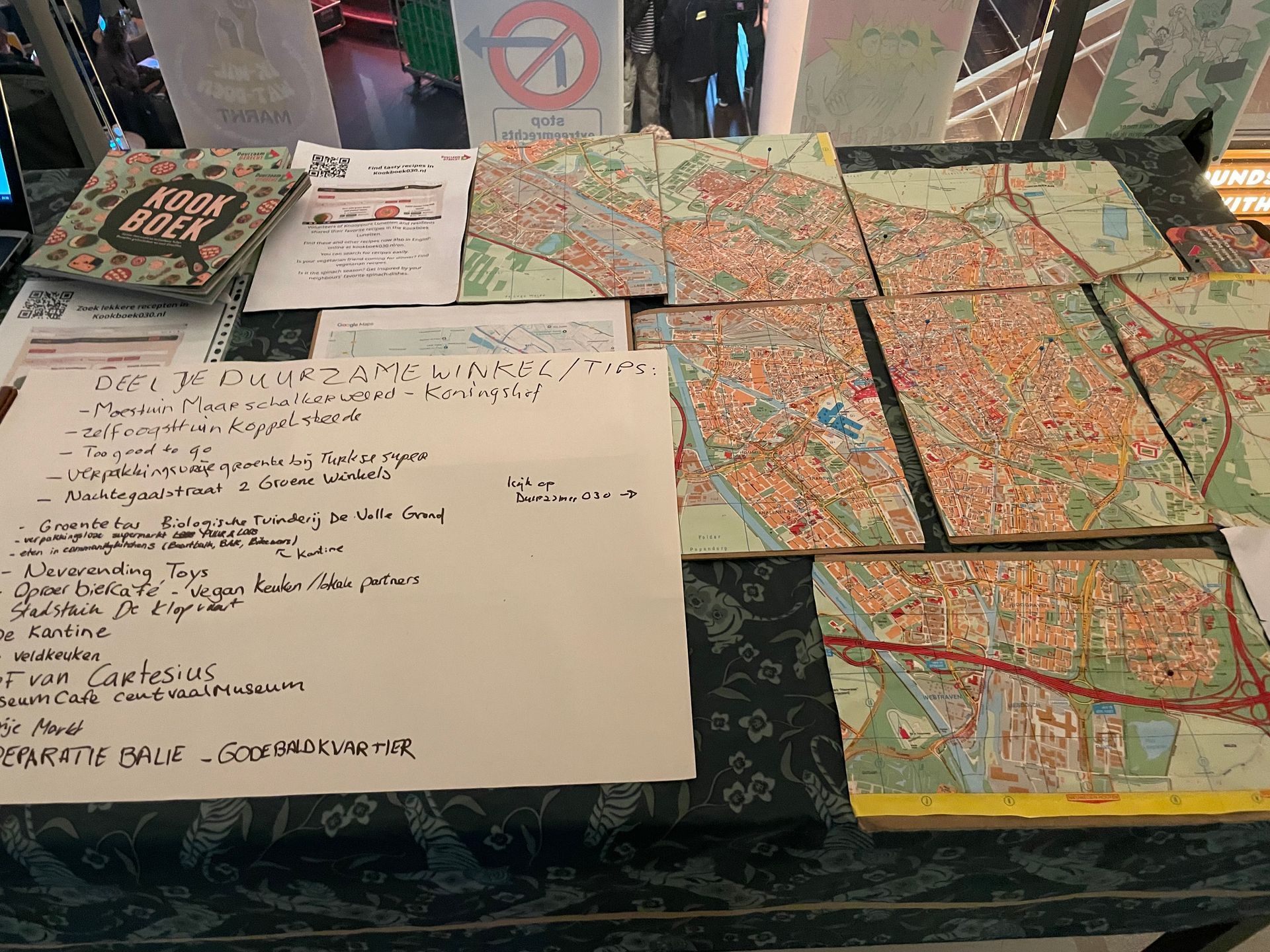
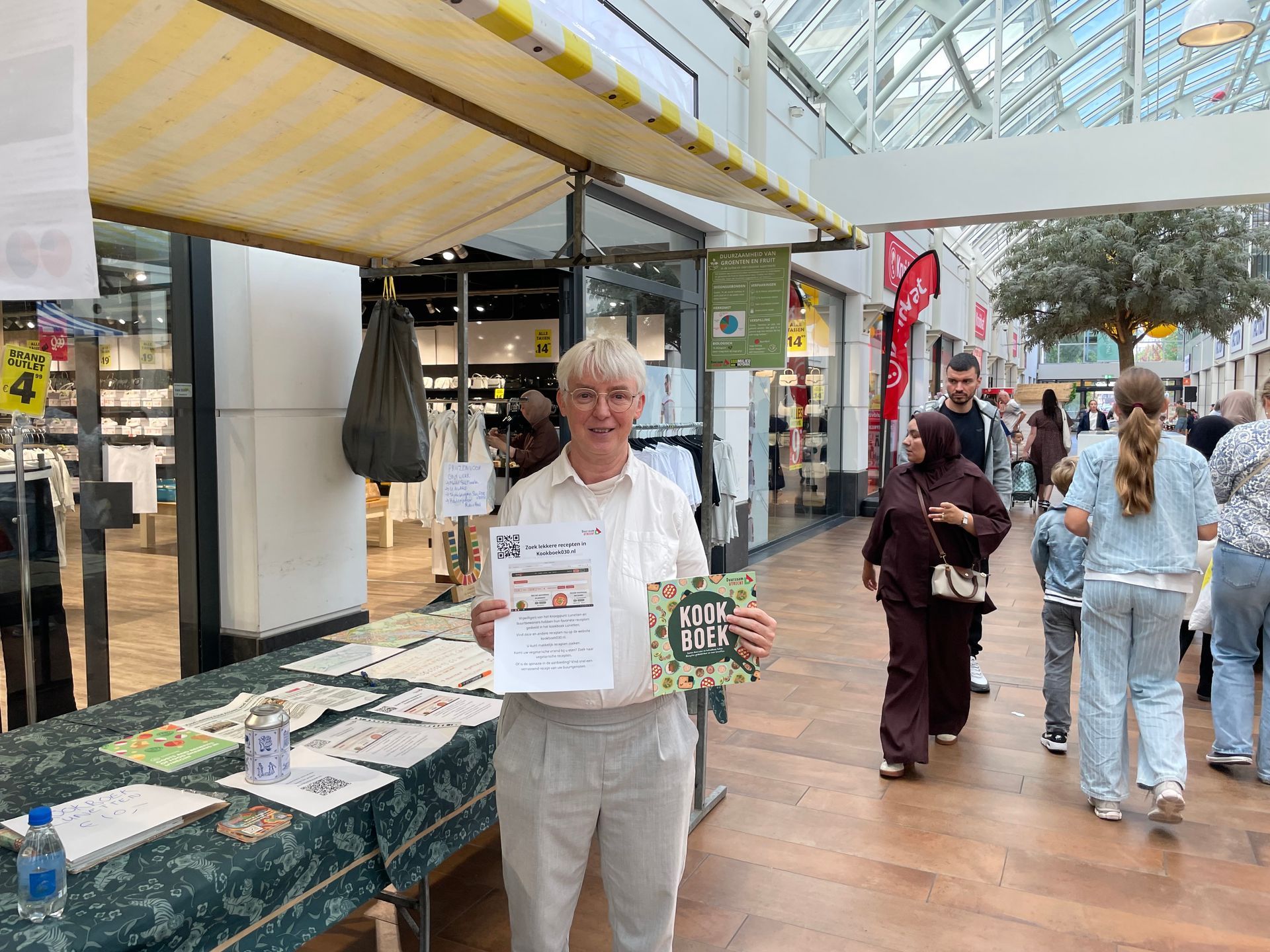
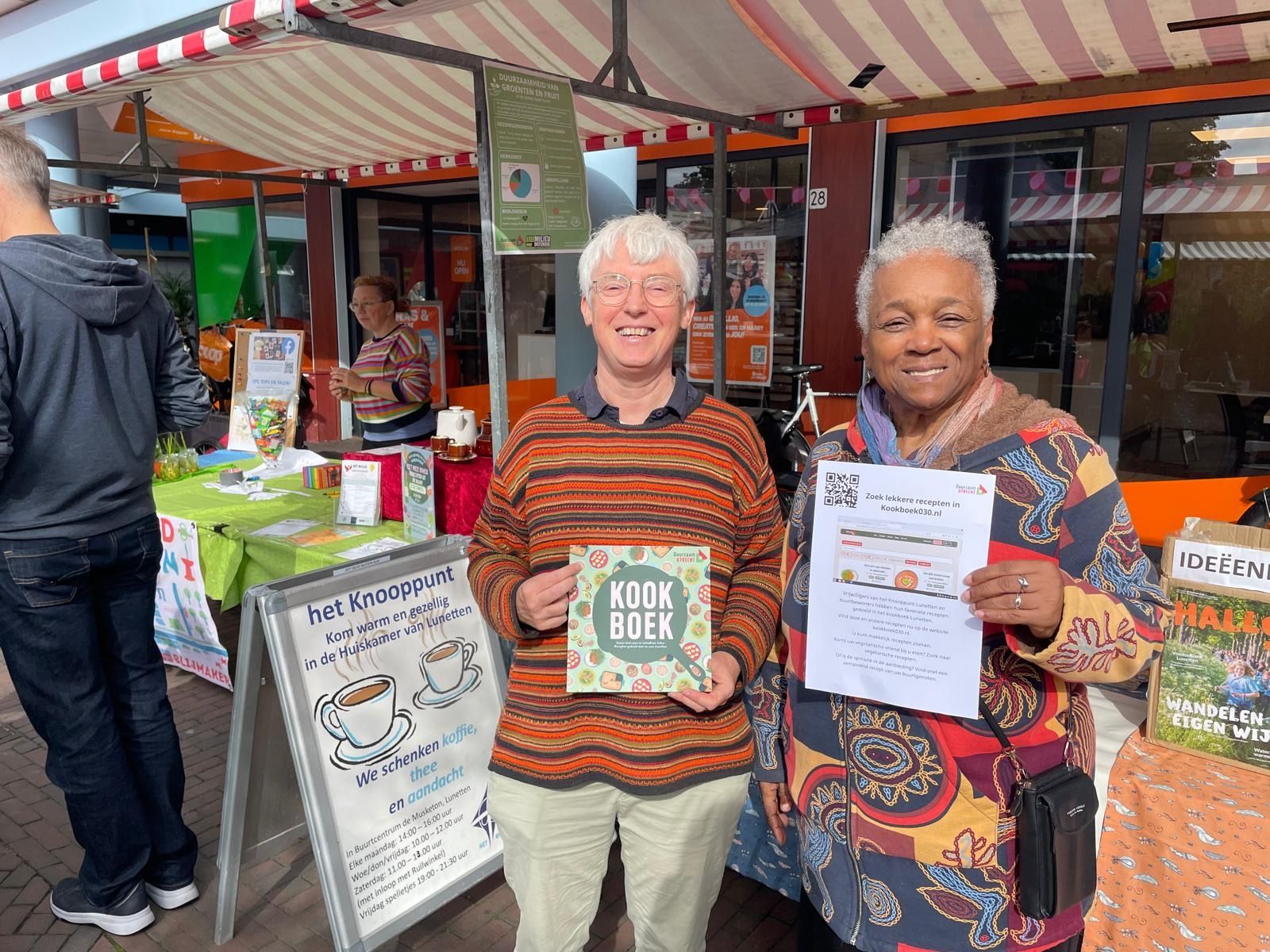
This poster presents the outcomes of a Cross-Over Internship with Duurzaam Utrecht 2030 in Utrecht, examining how neighbourhood-based food initiatives can either challenge or unintentionally reproduce structural inequalities in food access. The project focuses on two connected lines of work: subsidised sustainable/organic grocery pilots and the Lunetten community cookbook initiative as a food-literacy and recipe-sharing intervention. Using a systems-thinking approach (stakeholder analysis and systems mapping) and a normative future vision aligned with the Milan Urban Food Policy Pact, the poster synthesizes how current activities interact with wider regime constraints (e.g., affordability pressures, institutional fragmentation, and limited organisational capacity). It identifies feasible leverage points for Duurzaam Utrecht 2030 to increase transition impact, prioritising improved information flows and feedback, stronger cross-sector coalitions, and capacity-building through partnerships and clearer portfolio focus. The poster concludes with actionable strategic advice for strengthening inclusive access to sustainable diets while maintaining community ownership and learning-by-doing in Utrecht’s neighbourhood context.
Download the poster here: Musa, E. A. (2026). Food Literacy, Food Access and Structural Inequality: A Strategic Advice for Duurzaam Utrecht 2030 Cookbook Initiative. Zenodo. https://doi.org/10.5281/zenodo.18430886