Economics Honours students advise on Utrechts climate vision
Policy recommendations for Utrecht from UU Honours Students
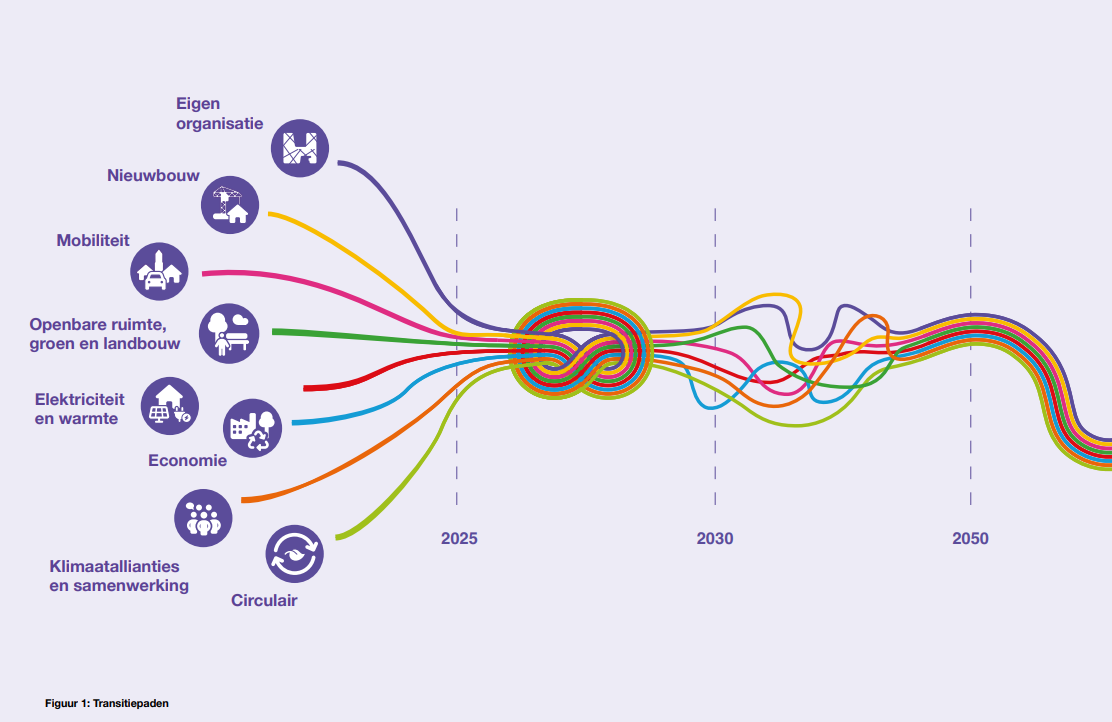
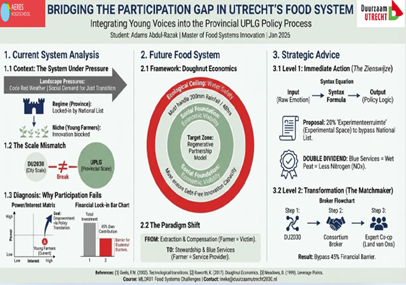
A group of Economic Honours students from Utrecht University held a policy sprint to develop a 'Zienswijze' on the municipal government of Utrecht's climate vision: www.utrecht.nl/klimaatneutraal.
Here are some policy recommendations that the students came up during the event. Pupils were put into separate groups and had to come up with ideas.
1. Public space, greenery, and agriculture & food cooperation:
I. Urban Greening and Citizen Participation
Property taxes (OZB) in Utrecht are already around 40% higher than the national average. Given this, the city should visibly reinvest in making Utrecht greener and more livable.
This can begin with:
• Expanding urban greenery by planting more trees and maintaining existing green spaces.
• Encouraging citizen participation by incentivising residents to plant greenery in private gardens or care for plants along sidewalks.
Currently, low participation is largely driven by financial costs and limited personal benefits, which—combined with moral hazard—results in insufficient collective action.
To address this, we propose:
• Making green roofs mandatory for buildings.
• Providing government subsidies for rooftop greening until 2030 to ease the transition.
• After 2030, introducing penalties for non-compliance.
Green roofs could also serve as community or private gardens, where residents collaborate with farmers or experts to learn how to grow food efficiently and sustainably.
II. Supporting Sustainable Farming
Farmers and urban residents often perceive climate challenges differently. Policies should therefore balance environmental goals with economic viability for farmers.
We recommend:
• Setting clear sustainability targets for farming practices.
• Supporting farmers in transitioning toward long-term, environmentally sustainable methods, while ensuring they can maintain a stable income.
III. Strengthening Local Food Systems
To connect the city with surrounding agricultural areas:
• Enable farmers to sell directly at local markets (e.g., Vredenburg market).
• Introduce a “local discount” for Utrecht residents, encouraging the purchase of locally produced food.
This would incentivise sustainable consumption, reduce food miles, and strengthen the local economy.
2. Electricity and Heat & Climate Alliances and Cooperation:
Land wide cooperations for nuclear energy, making the country energy independent.
3. Circular:
1. Incentivising Recycling and Circular Consumption
• Expand deposit-return systems (statiegeld) to include glass and tin cans, encouraging higher return rates.
• Introduce financial incentives for recycling and reuse, allowing consumers to earn money (not just reclaim deposits).
• Provide vouchers for purchasing recycled, second-hand, or kringloop goods to stimulate circular consumption.
• Develop local systems to recycle paper waste into Utrecht-produced packaging, such as souvenir packaging or newspapers.
2. Supporting Reuse and Repair
• Increase the number of kringloop (second-hand) stores across the city.
• Organise and sponsor technology repair workshops, and introduce tax exemptions for repair services to extend product lifespans.
• Establish regular “market days” where citizens can sell or exchange second-hand items in public spaces.
• Promote adaptive reuse of old buildings (“reverse old buildings”) instead of demolition.
3. Sustainable Food Systems
• Promote vegetarian diets through awareness campaigns and incentives.
• Provide subsidies for restaurants that source local products (vegetables, grains, beverages).
• Introduce a tax on food waste for supermarkets to reduce excess and improve redistribution.
• Encourage partnerships like Kromkommer with supermarkets to sell imperfect produce and reduce waste.
4. Community and Local Economy Initiatives
• Strengthen local circular economies by connecting citizens, businesses, and reuse initiatives.
• Encourage community participation through events, incentives, and local production loops.
4. Cooperation with other cities and governments:
Sustainable Mobility and Innovation in Utrecht
I. Promoting Sustainable Transport
• Introduce a subsidy that allows passengers to bring bicycles on trains for free, reducing barriers to combining cycling and public transport.
• This would encourage low-carbon commuting both within Utrecht and between cities, making sustainable travel more convenient and accessible.
II. Smart Infrastructure and Renewable Energy
• Explore international collaboration (e.g., with Japan) to install energy-generating sidewalk tiles that produce electricity from walking and cycling.
• Assess the feasibility of transforming canals into small-scale hydropower systems, generating renewable energy while preserving the city’s historic character.
III. Innovation and Knowledge Sharing
• Organize government-led hackathons focused on solving local sustainability challenges.
• Make these events open and public, encouraging participation from citizens, students, and businesses.
• Expand them to an inter-city or international level to foster collaboration and knowledge spillovers, similar in spirit to global initiatives like the UN Sustainable Development Goals (SDGs).